
If you turn on the financial news, you are instantly bombarded with predictions. Pundits constantly argue about which stock is about to soar, when the next recession will hit, and exactly when you should buy or sell. For a diligent saver planning for the future, this constant noise is exhausting. Fortunately, there is a much better way to build long-term wealth, and it begins with a transition to investment stewardship.
As your Personal CFO, our goal is to help you experience a “Metanoia”—a fundamental change in how you view your wealth. You do not need a crystal ball to achieve financial peace. You simply need a reliable, scientifically backed strategy.
What Is Investment Stewardship?
Investment stewardship is the practice of managing wealth using decades of academic research and financial science, rather than emotional predictions or stock-picking, to capture long-term market returns.
Instead of trying to find the needle in the haystack, this strategy buys the whole haystack. Financial science has taught us that the market is an effective information-processing machine. Each day, the world equity markets process billions of dollars in trades between buyers and sellers—and the real-time information they bring helps set prices.
Because the market is so efficient, trying to outguess it is a losing game. In fact, historical data shows that only 17% of US-domiciled funds beat their benchmarks over the past 20 years. By embracing market pricing instead of fighting it, we position your portfolio to capture the natural growth of human ingenuity over time.
The Three Pillars of Investment Stewardship
To implement an effective strategy, we focus on what we can actually control. We build portfolios around these three core pillars:
-
Target Higher Returns Systematically: Academic research into decades of stock and bond returns has identified long-term drivers of outperformance. Instead of guessing, we systematically invest in areas with expected higher returns. For example, small companies outperform large companies over time, and value stocks outperform growth stocks over time.
-
Diversify Internationally: Your financial life should not depend entirely on the fortunes of a single country or a single sector. Holding a globally diversified portfolio can broaden your opportunities beyond your home market. This puts you in a better position to capture higher returns wherever they appear.
-
Avoid Market Timing: Research has shown there is no reliable way to time the market—targeting the best days to be invested or moving to the sidelines to avoid the worst days. Missing just a few of the market’s single best days can drastically reduce your long-term wealth. Staying invested helps ensure you are in position to capture long-term gains.
For more information on how the government views and regulates investment management, you can review the educational resources provided on the SEC’s Investor.gov website.
Managing Your Emotions in the Red Zone
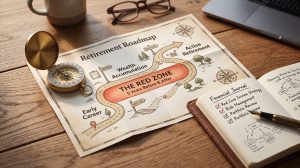
When markets go up and down, many people struggle to separate their emotions from investing. Reacting to current market conditions may lead to making poor investment decisions. This emotional risk becomes even more dangerous as you enter the “Red Zone”—the critical years just before and after you retire, where Sequence of Returns Risk can severely impact your long-term cash flow.
This is exactly why you need more than just an investment account; you need a fiduciary partner. As a fee-only fiduciary financial planner, my role is to act as a coach and trusted advisor to protect you from knee-jerk emotional decisions when the inevitable storms of life come your way. We integrate your investments directly with your overall financial picture, which you can read more about in our guide to what it means to have a Personal CFO.
Take the Next Step
You cannot control which way the market will turn tomorrow, but you can control your strategy. As your Personal CFO, this is the kind of proactive planning we do every day. Click here to schedule an ‘Introductory Fit Call’ to see if we’re a good fit for you and your family.