Turn on the financial news, and you’ll be told the market is “nervous,” “jittery,” or “plunging.” This constant stream of information creates a powerful, biological urge to do something. It’s a 24/7 test, not of your intelligence, but of your investing temperament.
At Metanoia Financial, we believe that developing the right mindset is the single most important—and most difficult—part of a successful financial life. It’s the foundation of our “Metanoia” philosophy: gaining a new perspective on what really matters.
The “Two Portfolios” Testing Your Investing Temperament
A key part of this “Metanoia” shift is realizing you are watching two very different “portfolios.”
-
The “Market” Portfolio: This is the one on TV. It’s an abstract index, like the S&P 500. It’s what people talk about at parties. It’s volatile, impersonal, and designed to grab your attention.
-
Your “Financial Life Plan” Portfolio: This is the one that matters. It’s not an abstract index; it’s a specific, curated collection of companies designed to fund your goals—your retirement, your family’s future, and your values. Its success isn’t measured day-to-day, but decade-to-decade.
When you feel anxiety from the “Market” portfolio, you’re tempted to make changes to your real portfolio. This is the moment where your investing temperament is truly tested.
A Short History of “Unprecedented” Times
The financial media is paid to make you believe that this time is different. But the truth is, the market is always navigating a crisis. In just the last 25 years, a long-term investor would have had to stop themselves from panic-selling through:
-
The dot-com bust (2000-2002)
-
The 9/11 attacks
-
The Global Financial Crisis (2007-2009)
-
The COVID-19 pandemic crash
-
The highest inflation in 40 years
At every single one of those moments, the “Market” portfolio looked terrifying. Yet, investors who had the patience to stay the course were profoundly rewarded. The painful losses from these events weren’t ultimately caused by volatility; they were caused by a failure of investing temperament that led to selling at the absolute bottom.
How Your Personal CFO Coaches Investing Temperament
This is where the role of a Personal CFO becomes so critical. My job isn’t to predict the next crisis. It’s to build a plan so robust that we don’t need to. We coach you through the noise by focusing on what we can control:
-
The Anchor (Your Plan): Your Financial Life Plan is our anchor in the storm. We don’t make emotional decisions based on the news; we make logical decisions based on your plan.
-
The Engine (Diversification): We acknowledge that we don’t know which companies will win, so we build a broadly diversified portfolio designed to capture the growth of human ingenuity.
-
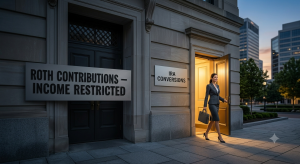
The Opportunities (Proactive Planning): Instead of worrying about volatility, we use it. We look for opportunities to rebalance, harvest tax losses, or execute strategic Roth Conversions.
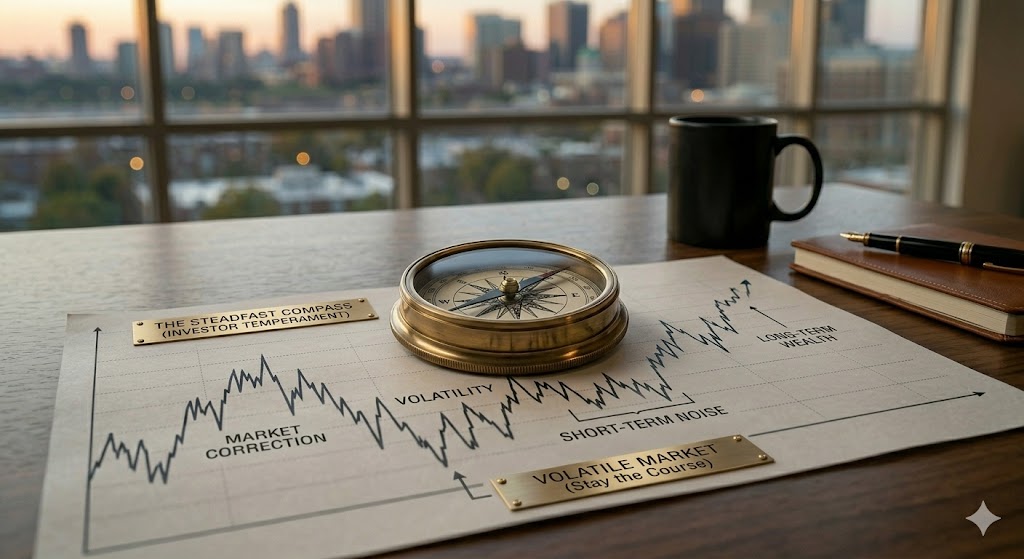
This is the “Metanoia” shift. Volatility is not just a risk to be feared; it is the price we pay for the long-term returns that build real wealth. Your investing temperament is the asset that allows you to pay that price.
Take the Next Step
As your Personal CFO, this is the kind of coaching and proactive, integrated planning we do for clients every day. If you’re ready for a new perspective, we invite you to schedule an ‘Introductory Fit Call’ to see if your family could benefit from our process.